
Bangkok cocktail travel and food pairing guide
Bangkok Cocktail Travel Guide: Night Markets, Thai Snack Pairings, and Collectible Culture
A detailed Bangkok travel guide for cocktail lovers, connecting rooftop bars, night markets, Thai snack pairings, responsible drinking, and collectible culture.
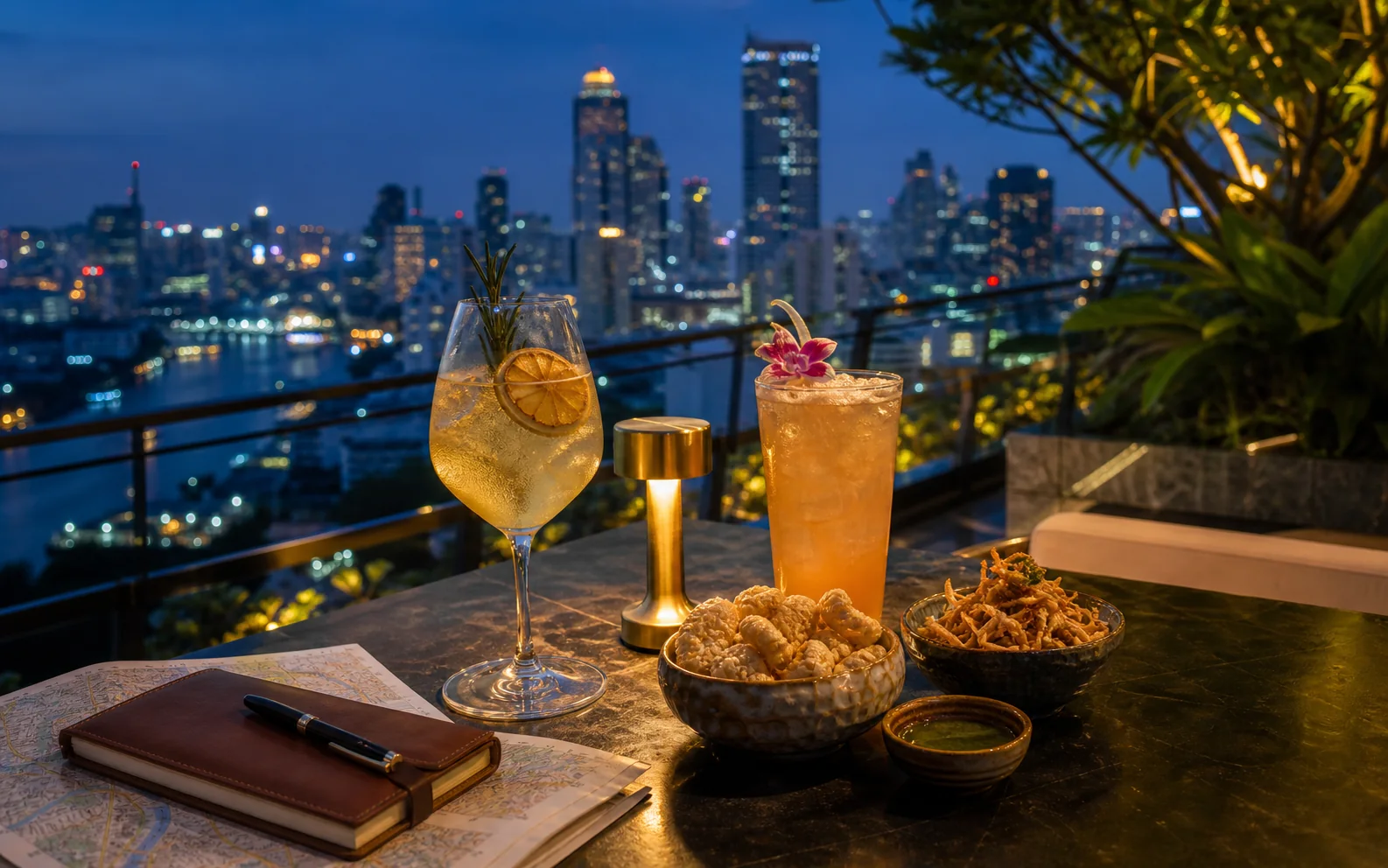
This guide is part of the restored United Cocktail Lovers knowledge base. For more context, read the restored cocktail collection gallery and cocktail-inspired art direction guide pages before returning to the detailed framework below.
Why Bangkok Belongs on a Cocktail Lover's Map
Bangkok works unusually well for cocktail-minded travelers because it is not only a bar city. It is a design city, a street-food city, a river city, a hotel city, and a late-evening walking city. That mix gives every drink a setting. A citrus highball after a canal walk feels different from a clarified punch served above the Chao Phraya, and both feel different from a zero-proof pandan spritz after a night-market dinner. For United Cocktail Lovers, that is the useful connection: cocktails are not just recipes, they are small cultural objects that collect memory, place, mood, and ritual.
The restored United Cocktail Lovers archive already treats cocktail bottles as collectible symbols. A Bangkok itinerary can use the same logic offline. Instead of asking where to drink first, ask what kind of evening you want to remember: skyline, street food, design district, live music, riverside walk, or quiet hotel lounge. That question prevents the trip from becoming a list of bars and turns it into a sequence. Read the restored cocktail collection first, then build a real travel route around color, flavor, pacing, and the people you are with.
Build the Evening Around Districts, Not Random Bars
A strong Bangkok cocktail route starts with geography. The Tourism Authority of Thailand Bangkok guide groups the city around food, shopping, spa and wellness, recreation, and transport because Bangkok is easier to enjoy when the day has zones. For a visitor, that means pairing Silom or Sathorn with rooftop views, Chinatown with street food and neon, Riverside with heritage hotels and slow walks, Thonglor or Ekkamai with modern dining, and Old Town with temples, galleries, and late-night snacks.
The mistake is trying to cross the whole city in one night. Bangkok traffic can turn a perfect bar list into a tired commute. Choose one district, one anchor meal, one cocktail stop, and one flexible after-stop. If the night is working, continue. If it is raining or the group is tired, the plan still feels complete. This is the same discipline a good website uses: one page, one purpose, clear internal links, and no dead ends. A travel plan is information architecture with shoes on.
Pair Thai Snacks With Drinks Like a Collector Builds a Set
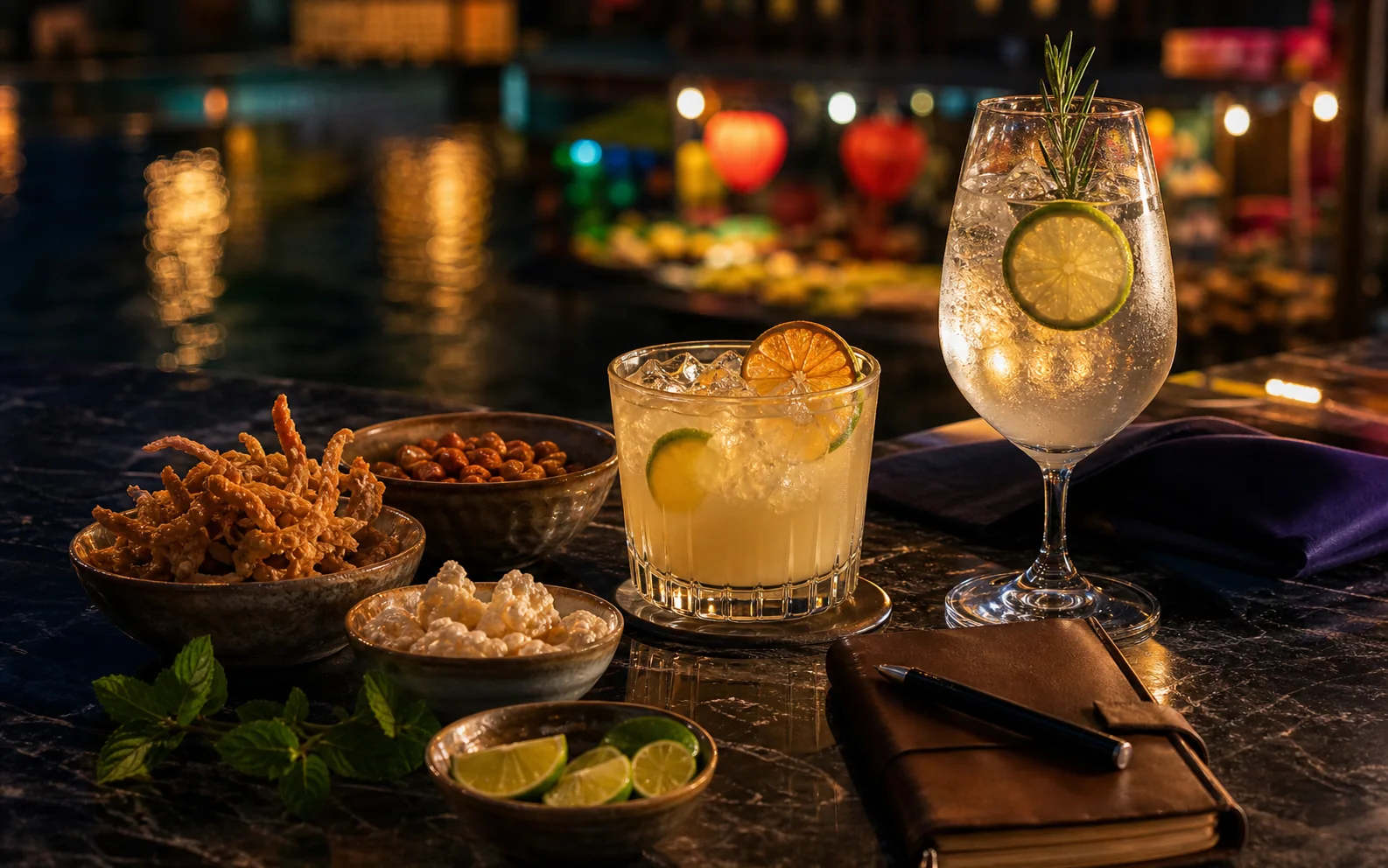
Thai snack pairing is where the article can become useful instead of generic. Crispy textures love acidity, herbs, salt, and bubbles. Lime-forward drinks can brighten fried shallot, lemongrass, or chili notes. A ginger spritz can work with tamarind and roasted peanuts. A low-alcohol vermouth soda can handle richer coconut or curry notes without making the evening heavy. If you want a clean reference point for giftable, travel-friendly flavors, a specialist in Thai crispy snacks can fit naturally into the same pairing mindset: the snack is not an afterthought, it is part of the tasting structure.
Think in pairs, not in menus. Crisp plus citrus. Spice plus sweetness. Salt plus bubbles. Herbs plus clean spirit. Richness plus bitterness. The method is educational because it helps readers understand why some combinations feel balanced. It also echoes the collectible logic of United Cocktail Lovers: a bottle design has a color system, a rarity tier, and a story; a pairing has texture, aroma, temperature, and timing. When those elements line up, the experience feels designed rather than accidental.
Responsible pacing matters here. Food is not a trick for drinking more; it is part of a better evening. Alternate alcoholic and non-alcoholic drinks, keep water on the table, and make the last stop easy to reach from the hotel. The goal is memory, not volume. The World Health Organization's alcohol topic page is a useful reminder that harmful use of alcohol is a real public-health issue, so cocktail travel should be built around taste, craft, conversation, and moderation rather than excess.
Use Classic Cocktail Structure as a Travel Lens
The IBA official cocktail list is helpful because it gives travelers a common language. You do not need to order every classic, but understanding sour, highball, stirred, sparkling, bitter, and tropical families makes menus easier to read. In Bangkok, that language often meets Thai ingredients: calamansi, kaffir lime leaf, pandan, lemongrass, galangal, tamarind, coconut water, Thai basil, chili, palm sugar, and local teas.
A traveler can use those families to plan the night. Start bright and light if dinner is still ahead. Move to something aromatic or stirred after the meal. Choose a zero-proof or low-ABV drink if the next day includes temples, markets, or a flight. A bar that can make a balanced non-alcoholic serve is often a better sign of craft than a menu full of aggressive spirits. It shows the team understands structure, dilution, acidity, sweetness, and garnish without relying only on alcohol strength.
Bring the United Cocktail Lovers Idea Into the Route
United Cocktail Lovers is built around the idea that a drink-shaped artwork can carry solidarity, humor, urgency, and national memory. A Bangkok cocktail route can borrow that idea without becoming a Web3 pitch. Ask what each stop collects: a skyline, a snack, a market sound, a design object, a conversation, a river view, a piece of music. A good travel night is a collection of moments, and the best moments are easy to explain afterward.
This is also why the visual language of the site matters. The cocktail-inspired art direction guide explains how bottle motif, rarity, color, and archive context can make a digital collection more legible. In travel, the same grammar helps readers choose. A blue-hour rooftop is one mood. Chinatown neon is another. A quiet hotel lounge after rain is another. Treat those moods like a set, and the itinerary becomes more memorable than a generic list of venues.
Other Trips That Extend the Same Theme
Bangkok can be the start rather than the whole story. Phuket is useful for beach clubs, sunset menus, and longer resort dining. Chiang Mai adds craft coffee, herbal flavors, markets, and a slower old-city rhythm. Ayutthaya works as a day trip when you want historical ruins before a calm evening back in Bangkok. Hua Hin gives a seaside version of the same pairing idea: grilled seafood, salty air, and lower-key hotel bars.
Internationally, Singapore is the obvious cocktail comparison because it has deep bar culture and a famous national drink story. Tokyo is valuable for precision, service ritual, and tiny bars. Seoul adds design-forward nightlife and food streets. But Bangkok's advantage is range: a traveler can move from temple courtyards to design galleries, from night markets to rooftops, from street snacks to serious hospitality, all inside one trip. That range makes it a natural subject for a cocktail culture site.
Official References and Practical Planning
Useful planning references include TAT's Jodd Fairs page, TAT's Yaowarat Night Market page, the Bangkok City of Design profile, the UNESCO Creative Cities Network, the IBA cocktail reference, and the WHO alcohol health topic.
Use official sources for opening patterns, neighborhoods, and broad planning, then verify individual venues close to the date of travel. Bangkok changes quickly: markets move, bars renovate, pop-ups disappear, and rooftop rules can shift with weather. The evergreen lesson is not a single venue name. It is the method: choose a district, pair food with drinks thoughtfully, keep moderation visible, and let the city shape the story.
Bangkok route map
How to design one balanced cocktail-travel evening
Use the route as a sequence instead of a checklist: district, food texture, drink family, moderation, and memory.
A Simple One-Night Template
Begin before sunset with a walkable district and a light snack. Move to a first drink that is bright, carbonated, or zero-proof so the evening starts fresh. Eat properly before any strong drink. Choose the second stop for atmosphere, not only menu prestige. End near the hotel or near a transit route that is easy to use. This keeps the night elegant and practical, which is much more useful than chasing every famous address.
For a United Cocktail Lovers reader, the deeper value is editorial. The trip teaches how flavor, object, place, and story connect. That is exactly what a collectible bottle does on the site: it compresses emotion into a form people can recognize quickly. Bangkok simply gives that idea a physical stage.
FAQ
Practical questions readers ask
What is the best Bangkok area for a first cocktail-focused evening?
For a first evening, choose a district that gives you several experiences without forcing long transfers. Riverside is excellent if you want hotel lounges, river views, heritage architecture, and a slower pace. Sathorn and Silom work well for rooftop bars, dining, and easier transport. Chinatown is better if food is the main event and you want neon, street snacks, and a livelier walk. Thonglor and Ekkamai suit modern dining, design-forward bars, and a more local nightlife rhythm. The best area is not the one with the most famous bar; it is the one that lets you connect dinner, one or two drinks, and the return to your hotel smoothly. Bangkok traffic can be tiring, so a compact route usually feels more premium than an ambitious route. Start with the atmosphere you want, then choose venues inside that zone. That method also leaves room for rain, jet lag, and spontaneous discoveries. If you are staying far from the district, book the return plan before the first drink. A small transport decision can protect the whole evening, especially when rooftop dress codes, last trains, or sudden tropical rain change the rhythm. Keep one backup stop nearby so the night still works if the main plan is full.
How do Thai snacks change the way cocktails should be paired?
Thai snacks often bring crunch, herbs, chili, sweetness, acidity, and salt in a compact bite. That means the drink should either refresh, contrast, or soften the food. Crispy snacks often pair well with citrus, soda, dry sparkling textures, ginger, or light bitterness because those elements reset the palate. Chili can work with sweetness and fruit, but too much alcohol heat can make spice feel harsher. Tamarind and lime flavors like clean acidity. Coconut or richer snacks often need bitterness, bubbles, or a lighter serve so the pairing does not feel heavy. The useful rule is to start with texture, then choose a drink family. Crisp wants refreshment. Heat wants balance. Herbs want aroma. Richness wants lift. This makes the pairing educational rather than random, and it fits the United Cocktail Lovers idea that a drink is a designed object, not just a liquid in a glass. Ask one extra question before ordering: should the drink echo the snack, or should it clean the palate? Echoing builds harmony; contrast keeps the next bite exciting. If several snacks are on the table, pair to the strongest flavor rather than the mildest one.
Can this itinerary work for people who do not drink alcohol?
Yes, and it should. A well-designed cocktail travel route is about flavor, hospitality, setting, and conversation, not only alcohol. Bangkok bars and hotel lounges increasingly understand zero-proof drinks, house sodas, teas, shrubs, kombucha-style acidity, fresh herbs, and tropical fruit as serious ingredients. A non-drinking traveler can follow the same structure: choose a district, eat well, order drinks with acidity and texture, and keep the night focused on atmosphere. In fact, zero-proof options are a good test of a venue's craft. If the bar can build balance without leaning on spirits, it probably understands dilution, sweetness, garnish, aroma, and temperature. For mixed groups, alternating alcoholic and non-alcoholic drinks also makes the evening more inclusive. Nobody has to split off or feel like the itinerary is built around consumption. The best Bangkok nights leave people with clear memories, not blurred ones. It also broadens who can join the route: pregnant travelers, people on medication, early risers, designated drivers, or anyone who simply wants taste without alcohol. Ask venues about non-alcoholic choices before booking when the group has different comfort levels. A route with good zero-proof choices is more flexible and usually more hospitable.
How does this travel article connect to an NFT cocktail archive?
The connection is the idea of collectibility. United Cocktail Lovers uses cocktail bottles as symbolic artworks, each with color, story, rarity, and cause-led context. A good travel night can be read the same way. The skyline view, snack texture, drink garnish, district, conversation, and final walk back to the hotel all become pieces of a set. That does not mean turning travel into a gimmick. It means noticing how small details carry memory. The restored site already teaches readers to look at a bottle motif as more than decoration. This article extends that habit into the real world: a cocktail can be a cultural marker, a souvenir of place, and a prompt for generosity or conversation. The NFT collection remains the archive; the travel guide gives readers a way to experience the same design logic in a city known for food, hospitality, and evening atmosphere. It also gives search visitors a new entrance into the site, linking practical travel curiosity back to the collection's story and visual system. In SEO terms, that makes the topic adjacent rather than random. The reader enters through Bangkok, then discovers the archive naturally.
What other destinations pair well with Bangkok for cocktail culture?
Phuket is the easiest extension if you want beach sunsets, resort bars, and seafood. Chiang Mai is better for a slower trip with craft coffee, markets, herbs, and northern Thai flavors. Hua Hin is practical for a seaside weekend with a calmer pace. Ayutthaya can be a day trip from Bangkok when you want history before returning to the city for dinner. Outside Thailand, Singapore is the strongest regional comparison for cocktail history and polished bar culture. Tokyo is ideal for precision, quiet service, and intimate bars. Seoul adds design energy and late-night food streets. The trick is to decide what you are collecting from each place: view, flavor, service style, music, food texture, or design mood. When a trip has that kind of theme, it becomes easier to plan and easier to remember. A two-city trip should still leave recovery time, because the best pairings lose their charm when every transfer is rushed. Plan one quiet morning after the strongest evening experience, especially if flights are involved. Good cocktail travel is edited, not overloaded. The strongest route often has fewer stops and better transitions.
Continue exploring the restored project
Use the collection pages to inspect the recovered artworks, creator credits, merch archive, and contribution paths.
restored cocktail collection gallery cocktail-inspired art direction guide